Composite Deck Installation in Minneapolis, MN
Composite decking looks similar in a showroom, but boards differ in construction, color, heat, and how they move. Choosing the wrong one for your yard is a mistake you live with for years.
What composite deck installation covers
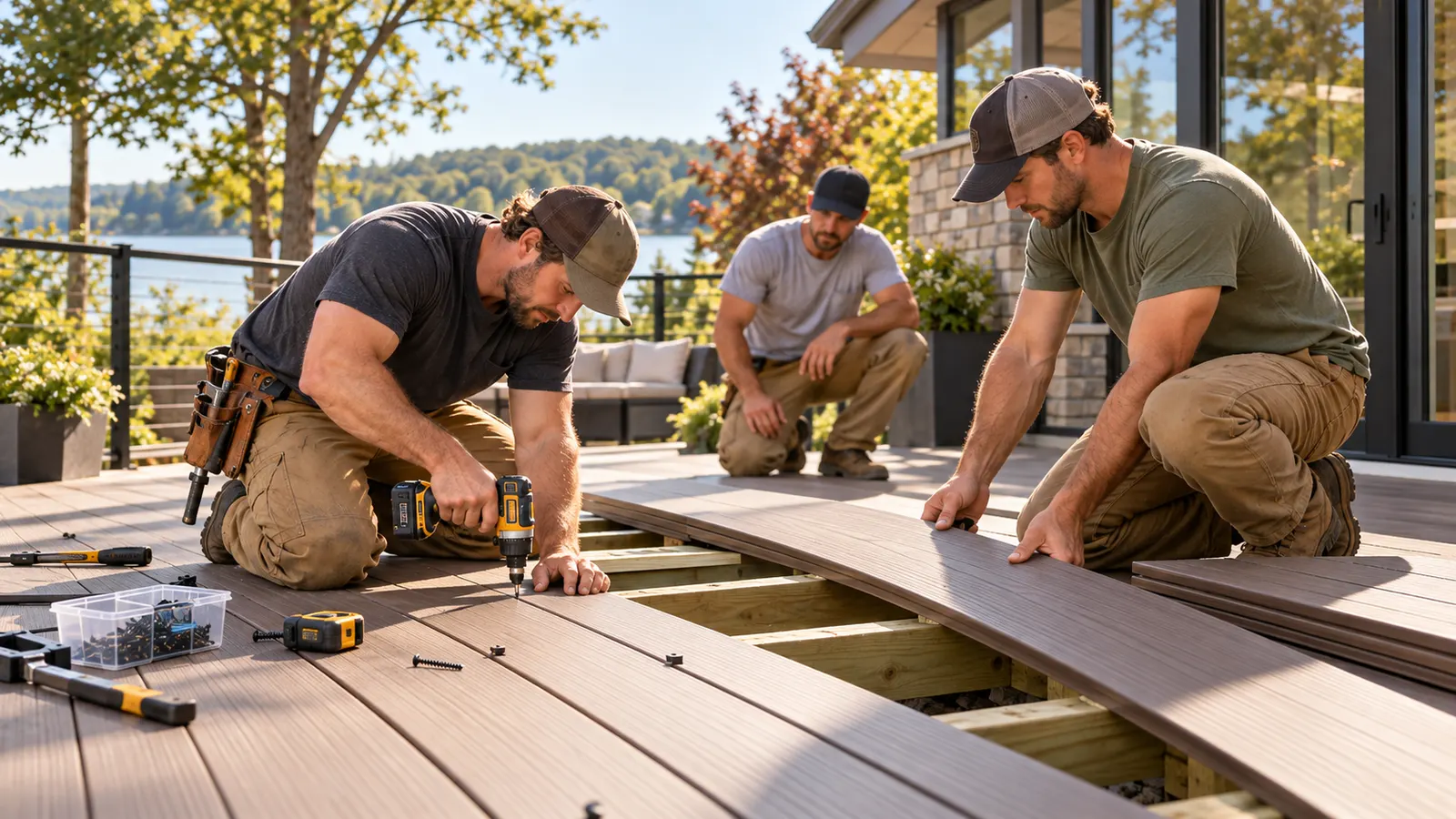
Composite installation is building a deck, or the surface of one, with boards made from a mix of wood fiber and plastic (or fully plastic boards) rather than solid wood. The work includes choosing a board, planning the layout, preparing the structure, and fastening the boards to the manufacturer's instructions.
This page is about choosing and planning. If you already know you want Trex specifically, see Trex deck installation. If you have an old deck to remove first, read about composite deck replacement.
Questions to settle before you choose a board
Each of these is a trade-off, not a right answer. Knowing which matters to you narrows the field fast.
- 1
Is the deck in full sun?
Darker boards can get hot underfoot in direct sun. If bare feet or pets are common, a lighter color or partial shade may matter more than the look.
- 2
How much do you want to clean?
Capped boards have a protective outer layer designed to resist staining and fading, and uncapped boards are generally less resistant. Neither stays clean without some care.
- 3
Do you want a wood-grain look?
Grain depth, color variation, and edge profile vary a lot between lines. Seeing a sample in daylight tells you more than a catalog photo.
- 4
What is under the boards?
Poor drainage or limited airflow below the deck affects both framing and boards. Ground level, ventilation, and where water goes all matter.
- 5
Is the budget one number or a range?
Board lines vary in price, and the frame and railing can cost as much as the boards. A realistic plan prices the whole system.
What Minnesota weather means for composite
Boards expand and contract with temperature, and Minnesota's range is wide. That makes gap spacing and fastener choice more than details, because a board installed tight on a cold day has nowhere to go in July.
Snow and meltwater are a second factor. Decks close to the ground need drainage and airflow so water does not sit underneath through the spring thaw, and winter shoveling calls for care with the board surface. Follow the manufacturer's guidance for snow removal on your product.
Permit and footing rules for decks are set by the City of Minneapolis and state code, not by the material you choose. See the sources below.
Material and layout decisions
These choices change cost, appearance, and how the deck performs.
- Capped versus uncapped boards
- A cap is a protective shell over the board core. Capped boards are generally more resistant to staining and fading, and they usually cost more. Ask each manufacturer what their specific cap does and does not do.
- Solid versus hollow profiles
- Hollow boards are lighter and can be cheaper, while solid boards feel denser. Edges, end treatment, and fastener options differ, so confirm the installation requirements for the specific profile.
- Layout and direction
- Straight runs, diagonals, picture-frame borders, and breaks all change waste, labor, and the joist spacing needed. Diagonals typically need closer framing.
- Ventilation and clearance below
- Space and airflow under the deck affect moisture. The plan should say where water leaves, not leave it to chance.
- Fasteners and hardware
- Face screws and hidden clips each suit certain boards. Use the system the manufacturer specifies for the product you pick.
How we plan a composite installation
- 01
Define the use
How big, how sunny, who uses it, and what has to fit: grill, table, planters, stairs.
- 02
Compare boards in person
Look at full-size samples and talk through capped versus uncapped, color, and heat.
- 03
Settle the structure and layout
Frame, footings, drainage, board direction, and railing are confirmed against code and the manufacturer's guide.
- 04
Build and review
Install, finish edges and stairs, and walk the result with you.
What drives the cost of a composite deck
Board price is only one line. The rest of the deck has to be built to match it.
For a realistic figure on your project, call (612) 493-1492.
- Size and complexity of the layout
- Board line, cap, and color
- Framing: new, reused, or rebuilt
- Height and stair count
- Railing, lighting, and trim
- Drainage and site access
- Permit and inspection costs
Composite Deck Installation questions
What is the difference between capped and uncapped composite?
A capped board has a protective outer layer over the core, designed to resist staining and fading. Uncapped boards lack that shell and are generally less resistant. Check what each manufacturer says its cap does.
Are some composite colors hotter than others?
Surface temperature depends on the product and color, and darker boards typically absorb more heat. If the deck is in full sun, test a sample outdoors before choosing.
Does composite need to be sealed or stained?
Typical capped composite is not stained or sealed the way wood is, though it does need cleaning. Follow the care instructions for your specific product.
How do I know which composite brand is best?
There is no single best one. The right board depends on your sun exposure, budget, and the look you want, so compare samples and each manufacturer's installation requirements.
Related decking services
Back to composite deck installation in Minneapolis or all decking services.
See the Minneapolis neighborhoods we build in, or read how Everlast Decks approaches a deck project.
Sources and further reading
- City of Minneapolis — Decks and Building Permits for 1 & 2 Family Dwellings (PDF)
- Minnesota Department of Labor and Industry — Residential Decks and the Minnesota Residential Code (PDF)
Permit, footing, and guard requirements change. Confirm current rules with the City of Minneapolis.