Composite Deck Railing Installation in Minneapolis, MN
If your deck rail moves when you lean on it, the problem is rarely the rail. It is usually how the post connects to the deck, and it matters most when someone actually falls against it.
What railing installation covers
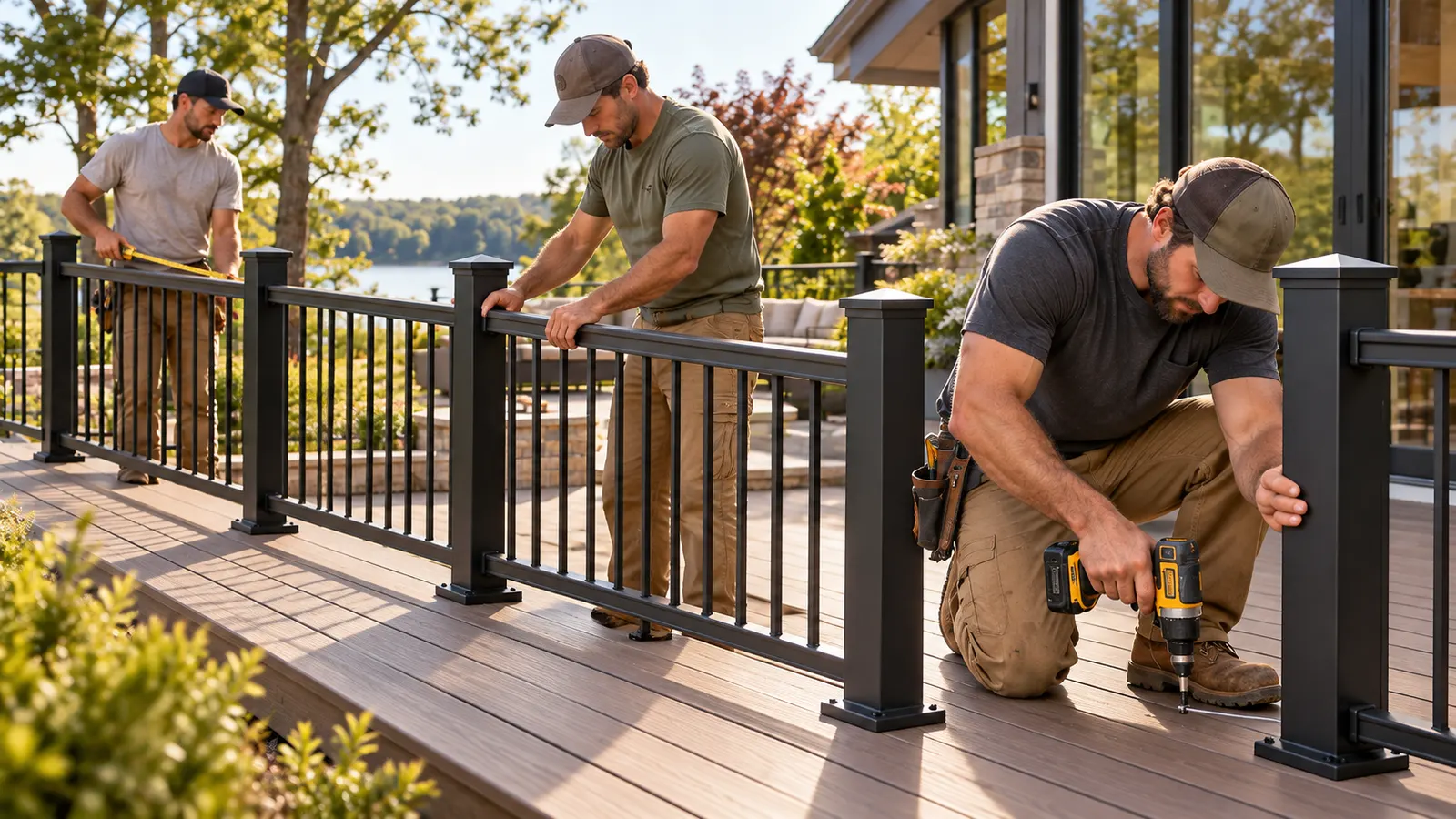
Railing installation is fitting posts, rails, and balusters (or infill) to the deck, and attaching them so they carry the loads that guards are required to carry. It may be done with a new deck or added to an existing one.
It is separate from board work. Composite deck replacement and resurfacing often include new railings, but railing can also be replaced alone, and many wobbly rails come down to a post that was never attached properly.
Taller decks bring stricter guard requirements, which are covered on our elevated deck page.
Signs a railing needs attention
A railing is a safety device. These are reasons to stop leaning on it and have it looked at.
- 1
Posts that move or rock
Movement at the base means the connection to the deck frame is loose or never reached solid framing.
- 2
Rails that sag or separate at the joints
Failed brackets, rusted screws, or rot in wood rails reduce strength.
- 3
Gaps wider than the code allows
Spacing between balusters is regulated, especially where children might be.
- 4
Rail or post attached only to deck boards
A post bolted to a surface board with nothing behind it cannot hold a load.
- 5
Visible rust, cracks, or rot
Corroded fasteners or softening wood mean the system is weakening.
Railing and Minneapolis weather
Seasonal movement tests railings. Frost can shift footings and framing slightly, and rails that were tight in July can loosen by spring. Fasteners and finishes should suit repeated freezing and thawing.
Snow and ice add loads and shoveling impacts at the base of posts. Posts attached on the surface of the deck face more of that than posts attached to blocking or the frame.
Guard height, post spacing, and baluster spacing are set by code and enforced in permit reviews. Ask the City of Minneapolis for current requirements for your deck, especially if it is high off the ground.
Railing system decisions
A railing can look right and still be installed wrong. These choices decide both.
- System compatibility
- Many railing systems are tested with specific post sizes and mounting methods. Use the parts and connection the manufacturer specifies, and do not mix them freely.
- Post connection
- Posts need solid support, typically blocking or framing below the deck surface. The way a post attaches affects how it feels for years.
- Material: aluminum, composite, or other
- Black aluminum is a common choice with composite decks, and composite rails match the boards. Each has different care needs and costs.
- Infill style
- Balusters, cable, glass, and other infill all have their own spacing, tension, and code issues.
- Gates, stairs, and corners
- Stair rails, graspable handrails, and gates add details that are easy to get wrong.
How railing work is planned
- 01
Look at what you have
Check height, post locations, and the framing behind them.
- 02
Choose a system
Pick the style and confirm it works with your boards and framing.
- 03
Prepare the framing
Add blocking or reinforcement where posts will mount.
- 04
Install and test
Set posts and rails to the manufacturer's instructions and check them for movement.
What affects railing cost
Linear footage is the start, and the details drive the rest.
For a realistic figure on your project, call (612) 493-1492.
- Length of railing, including stairs
- System and material
- Post count and corner layout
- Reinforcing framing for post mounts
- Gates and special details
- Removal of the old railing
- Permit or inspection requirements
Composite Deck Railing Installation questions
Can I add railing to an existing composite deck?
Often yes, but the posts need solid attachment points. If there is no blocking where posts must go, it has to be added.
Why does my new railing wobble?
Usually because posts are fastened to deck boards or loose framing. Posts need to attach to structure that can take a load.
Do all decks need railings?
Not every deck, but guard requirements depend on height above grade and the rules in effect. Ask the City of Minneapolis about your deck.
Are aluminum or composite railings better?
Neither is better across the board. They differ in look, maintenance, and cost, so pick based on how they suit the deck and your upkeep preferences.
Related decking services
Back to composite deck installation in Minneapolis or all decking services.
See the Minneapolis neighborhoods we build in, or read how Everlast Decks approaches a deck project.
Sources and further reading
- City of Minneapolis — Decks and Building Permits for 1 & 2 Family Dwellings (PDF)
- Minnesota Department of Labor and Industry — Residential Decks and the Minnesota Residential Code (PDF)
Permit, footing, and guard requirements change. Confirm current rules with the City of Minneapolis.